
Porcelain vs Ceramic Tile: Which Is Better?
Porcelain vs ceramic tile explained. Compare durability, water absorption, cost, installation and the best applications for each tile type.
Choosing between porcelain and ceramic tile is one of the most common decisions homeowners face during a renovation.
Both materials are durable. Both are available in a wide range of colours, sizes, patterns and finishes. Both can work beautifully in modern and traditional homes.
However, porcelain and ceramic tile are not exactly the same.
Porcelain is denser and has lower water absorption, while ceramic can be an excellent choice for walls, backsplashes and other interior applications.
So, which is better?
The answer depends on where you plan to install the tile, how the space will be used and what performance you need.
This guide explains the differences between porcelain and ceramic tile so you can make a more informed decision.
If you're comparing tile options for a renovation, our tile buying guide GTA can also help you evaluate materials, sizes, finishes and other important factors.
Porcelain vs Ceramic Tile: The Short Answer
Porcelain is often the better choice for demanding applications where durability and low water absorption are important.
Ceramic can be an excellent choice for walls, backsplashes, decorative applications and many lower-impact areas.
Neither material is automatically better for every project.
The right choice depends on the specific product and application.
Feature | Porcelain Tile | Ceramic Tile |
Density | Higher | Lower |
Water absorption | Lower | Generally higher |
Durability | Excellent | Good to excellent |
Floor applications | Excellent | Product-dependent |
Wall applications | Excellent | Excellent |
Backsplashes | Excellent | Excellent |
Design options | Extensive | Extensive |
Large formats | Widely available | Available in selected formats |
Maintenance | Generally easy | Generally easy |
Always check the manufacturer's specifications before purchasing a particular tile.
What Is Porcelain Tile?
Porcelain is a type of ceramic tile manufactured using refined materials and fired at high temperatures.
The manufacturing process creates a dense, durable material with low water absorption.
That makes porcelain particularly versatile.
It can be used for:
Floors
Bathrooms
Kitchens
Entryways
Living areas
Feature walls
Large-format installations
Many commercial applications
Modern porcelain can also replicate the appearance of other materials.
For example, homeowners can find porcelain that looks like:
Marble
Natural stone
Wood
Concrete
Limestone
Onyx
Terrazzo
This gives designers considerable flexibility when creating a specific look.
What Is Ceramic Tile?
Ceramic tile is also manufactured from clay and other natural materials and fired in a kiln.
However, ceramic tile generally has a higher water absorption rate than porcelain.
That does not make ceramic a poor material.
Ceramic is widely used for interior walls, backsplashes, decorative applications and many residential projects.
Its design flexibility is one of its biggest advantages.
Ceramic tile is available in:
Subway formats
Square tiles
Rectangular tiles
Decorative patterns
Textured surfaces
Glossy finishes
Matte finishes
Numerous colours
For many wall and decorative applications, ceramic can be an excellent choice.
Porcelain vs Ceramic: Which Is More Durable?
Porcelain generally has the advantage when durability is a priority.
Its higher density makes it well suited to many high-use applications.
This is one reason porcelain is popular for:
Main floors
Entryways
Kitchens
Open-concept living areas
High-traffic residential spaces
However, durability should always be evaluated based on the specific product.
Not every porcelain tile is identical.
Check the manufacturer's technical specifications before selecting a product for a demanding application.
Which Is Better for Bathroom Floors?
Porcelain is often a strong choice for bathroom floors.
Bathrooms experience moisture, regular cleaning and everyday foot traffic.
When choosing bathroom floor tile, consider more than the material.
You should also look at:
Slip resistance
Surface texture
Tile size
Grout requirements
Maintenance
Installation requirements
For more guidance on choosing bathroom flooring, see our guide to best bathroom floor tiles in the GTA.
Ceramic can also work for certain bathroom applications, particularly walls.
For shower walls and decorative bathroom surfaces, both porcelain and ceramic can offer excellent design possibilities.
Which Is Better for Kitchen Floors?
Porcelain is often preferred for kitchen floors because of its durability and resistance to moisture.
Kitchens also experience:
Foot traffic
Food spills
Cleaning
Dropped objects
Frequent use
A durable porcelain floor can provide a practical foundation while still offering a high-end appearance.
Ceramic may still be appropriate for certain kitchen applications, particularly backsplashes.
Which Is Better for a Kitchen Backsplash?
Both porcelain and ceramic can work extremely well for kitchen backsplashes.
In fact, ceramic is one of the most popular materials for decorative backsplash applications.
A backsplash generally does not experience the same wear as a floor.
That gives homeowners more freedom to focus on:
Colour
Shape
Pattern
Texture
Finish
Subway tile, decorative ceramic and patterned tile can all create strong backsplash designs.
Porcelain also provides excellent options, particularly if you want a stone-look or large-format backsplash.
Is Porcelain More Expensive Than Ceramic?
Not necessarily.
The price of both materials varies considerably based on:
Brand
Size
Finish
Design
Manufacturing
Product quality
Availability
A basic porcelain tile may cost less than a premium ceramic tile.
A specialty porcelain product may cost considerably more.
Therefore, do not compare porcelain and ceramic based only on material type.
Compare the actual products, specifications and intended application.
Is Porcelain Harder to Install?
Porcelain is denser and can be more challenging to cut than some ceramic products.
Large-format porcelain can also require specialized tools, handling and installation techniques.
This is particularly important for:
32×64 tile
36×72 tile
Large wall panels
Slab-style surfaces
Proper substrate preparation and installation are essential.
Always make sure your installer has experience with the specific tile format you have selected.
For projects involving larger tile formats, our guide to large-format kitchen tiles provides additional design and planning considerations.
Porcelain vs Ceramic: Which Should You Choose?
Use porcelain when you prioritize:
Durability
Low water absorption
High-use flooring
Large-format options
Stone-look designs
Wood-look designs
Long-term versatility
Consider ceramic when you prioritize:
Decorative wall applications
Backsplashes
Lightweight wall tile
Traditional tile formats
Extensive decorative options
Ultimately, the application should determine the material.
The right choice is not simply about choosing porcelain over ceramic. It is about selecting a tile that suits the space, installation requirements, design and expected level of use.
How Big M Stone & Tiles Can Help
Choosing tile is easier when you can compare products in person.
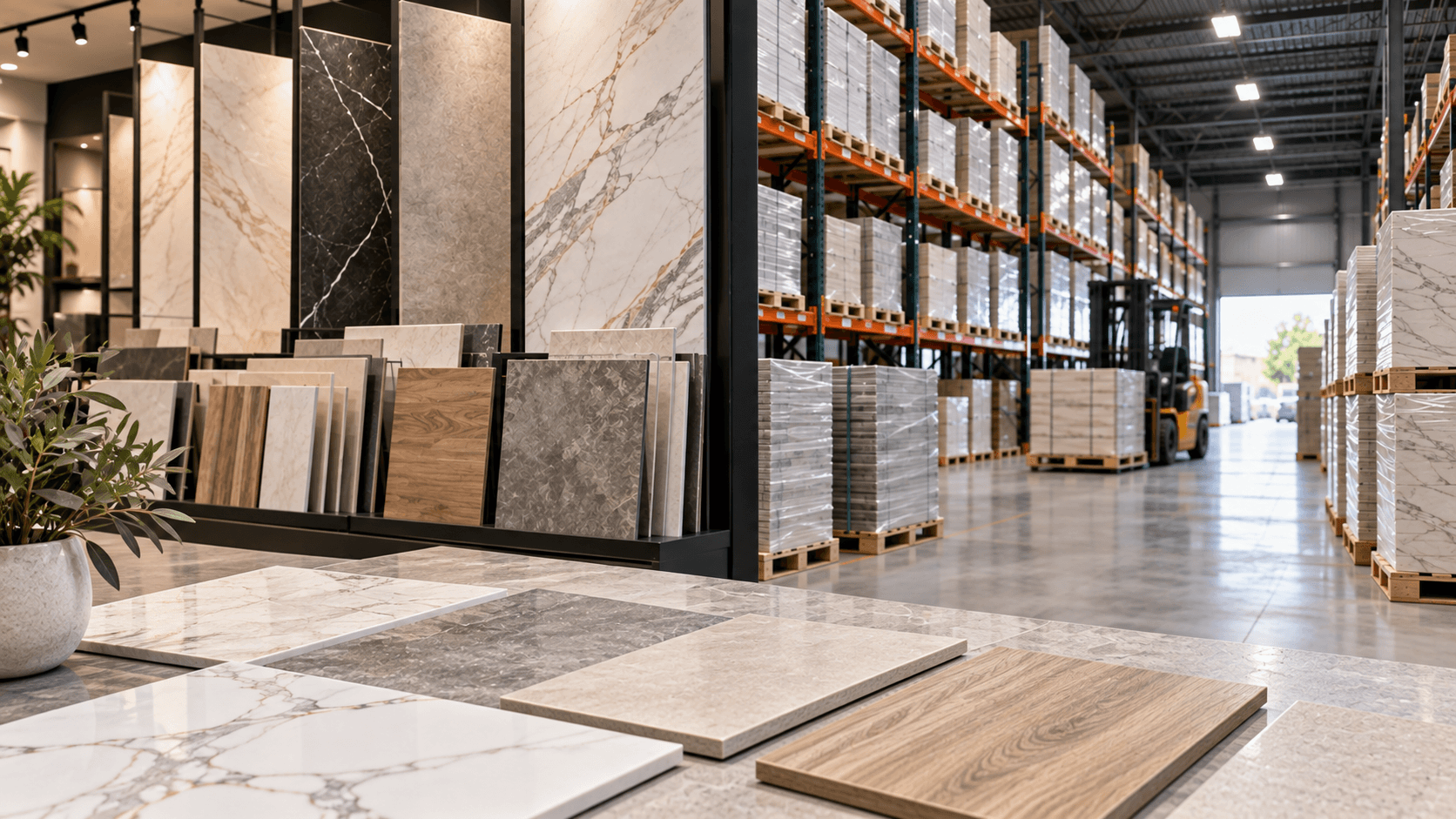
At Big M Stone & Tiles in Brampton, homeowners, designers, contractors and builders can explore a broad selection of porcelain, ceramic, stone-look, decorative and large-format tile.
The showroom covers more than 20,000 sq. ft., while the warehouse spans more than 200,000 sq. ft.
This gives customers an opportunity to compare materials, sizes, finishes and styles before making a final decision.
For higher-end renovations and custom residential projects, homeowners can also explore our guide to luxury tiles for custom homes.
Working with an experienced tile supplier GTA can also make it easier to compare options, confirm availability and select products that fit your project requirements.
Frequently Asked Questions
Is porcelain better than ceramic tile?
Porcelain is generally more durable and has lower water absorption. However, ceramic can be an excellent choice for walls, backsplashes and decorative applications.
Can ceramic tile be used on floors?
Yes. Certain ceramic tiles are suitable for floors. Always confirm that the specific product is rated for the intended application.
Is porcelain tile good for bathrooms?
Yes. Porcelain is a popular choice for bathroom floors and walls because of its durability and low water absorption.
Is ceramic tile good for kitchen backsplashes?
Yes. Ceramic is widely used for kitchen backsplashes because it offers extensive design options.
Is porcelain more difficult to cut?
Porcelain is generally denser than ceramic, so it can require more specialized cutting equipment and installation experience.
Which lasts longer, porcelain or ceramic?
Porcelain generally offers greater durability. However, proper installation and maintenance also have a major impact on longevity.
Final Verdict
There is no universal winner in the porcelain vs ceramic tile debate.
Choose based on the application first.
For demanding floors and high-use areas, porcelain is often the stronger option.
For walls, backsplashes and decorative applications, ceramic can provide excellent performance and design flexibility.
The best tile is the one that fits the space, performs properly, looks right and works within your project requirements.
Porcelain vs ceramic tile explained. Compare durability, water absorption, cost,...
Oct 6, 2026

Tile buying guide GTA: learn how to choose the right tile material, size, finish...
Oct 1, 2026

Looking for a tile supplier for builders in Ontario? Learn how to evaluate inven...
Sep 21, 2026
Porcelain vs ceramic tile explained. Compare durability, water absorption, cost, installation and th...
Oct 6, 2026
Oct 1, 2026
Sep 21, 2026

Sep 16, 2026
Sep 9, 2026