
Tile Supplier for Builders in Ontario: What to Look For
Looking for a tile supplier for builders in Ontario? Learn how to evaluate inventory, product consistency, showroom selection and project support.
Builders have different requirements from homeowners purchasing tile for a single renovation.
A builder may need materials for several homes, multiple units or an entire residential development. Product consistency, inventory, pricing, logistics and supplier reliability can therefore have a significant impact on the project.
That is why choosing a tile supplier for builders in Ontario involves much more than comparing product selection. The right supplier should be able to support a builder's requirements from product specification and selection through ordering, delivery and additional material needs.
This guide explains what builders should evaluate when comparing tile suppliers for residential projects in Ontario, including inventory, warehouse capacity, showroom support and long-term service.
What Makes a Good Tile Supplier for Builders?
A reliable supplier should be able to support more than one purchase or individual project. Builders should evaluate whether the supplier can provide consistent products, clear communication and practical support throughout the construction process.
Important considerations include:
Product availability
Warehouse capacity
Product selection
Consistency across orders
Large-format options
Showroom access
Buyer-selection support
Delivery coordination
Additional material availability
Long-term communication
The right combination will depend on the size, design and requirements of each development.
1. Consistent Product Availability
Builders often work on projects with multiple homes, units or construction phases. If the same tile is specified across several homes, the supplier needs to be able to support repeat orders and ongoing material requirements.
Product availability can affect:
Construction schedules
Interior design consistency
Purchasing
Buyer selections
Installation
Future replacement requirements
Additional project phases
Before committing to a product, builders should ask about current inventory, expected availability and whether additional quantities can be sourced later.
A product may be available when the first home is being completed but become more difficult to obtain when another phase begins. Discussing anticipated requirements with the supplier early can help builders make more informed decisions.
Builders should also confirm whether the selected product is expected to remain in production and whether matching sizes, finishes or coordinating materials are available.
2. Inventory and Warehouse Capacity
Builders need suppliers that can handle the volume and timing of their projects.
A supplier with limited inventory may be suitable for an individual renovation but less appropriate for a builder managing several homes or a larger residential development.
Warehouse capacity becomes particularly important when a builder needs:
Large quantities of tile
Repeat orders
Multiple tile categories
Large-format materials
Materials for several homes
Additional products during construction
Stock for future repairs or replacements
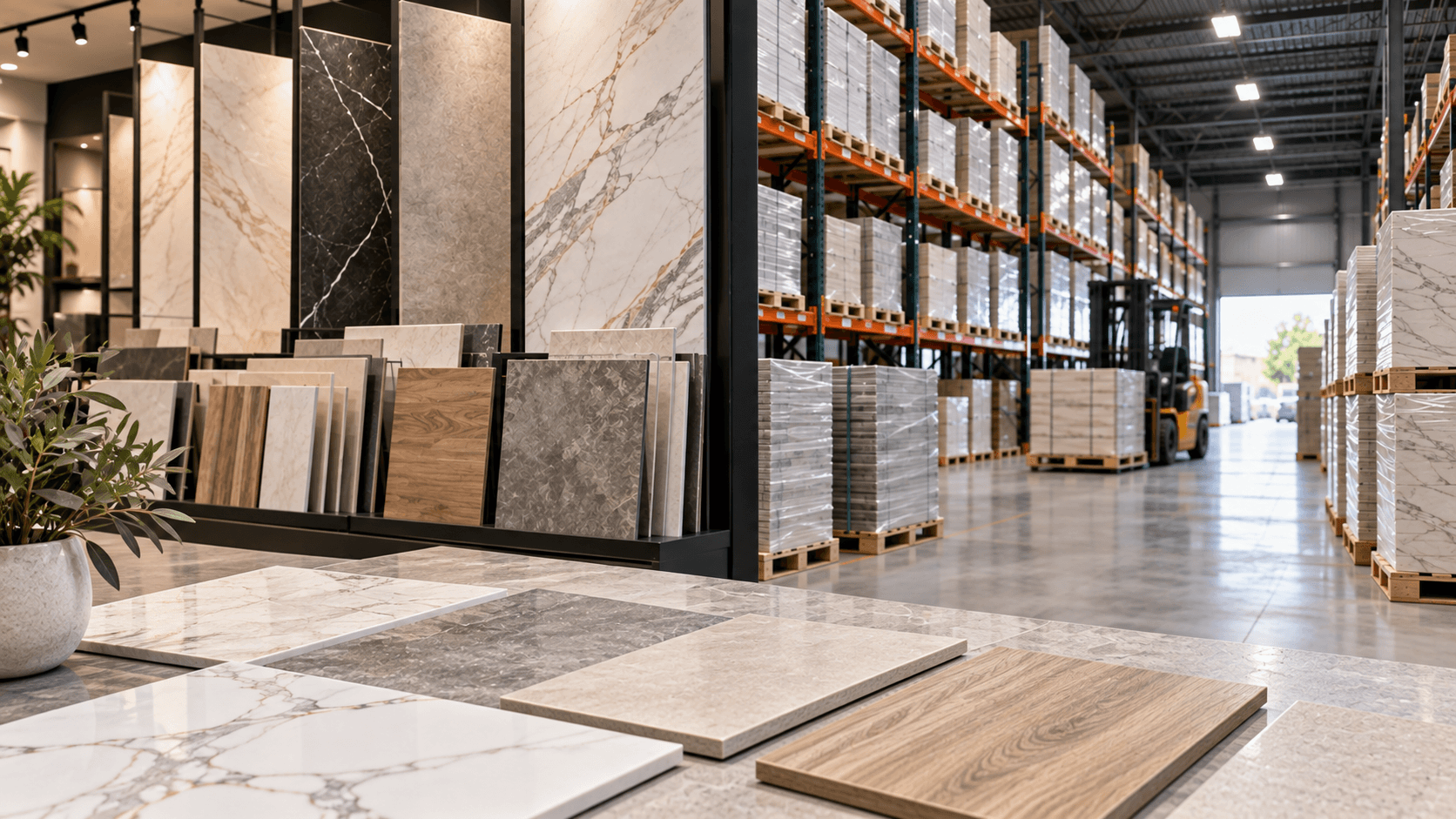
When comparing a tile warehouse GTA option, builders should look beyond showroom size and ask about actual inventory, storage capacity, product organization and the ability to support larger orders.
Big M Stone & Tiles operates a warehouse exceeding 200,000 square feet in Brampton, alongside a showroom exceeding 20,000 square feet. Builders can explore a range of tile and stone materials while discussing the requirements of their residential projects.
Warehouse capacity does not automatically guarantee that every product or quantity will be available. Builders should still confirm specific stock levels, expected lead times and the availability of additional material before finalizing a specification.
3. Broad Product Selection
Builders may need to offer buyers several design options while maintaining consistency across a development.
A supplier with a broad collection can provide materials for:
Kitchens
Bathrooms
Entryways
Laundry rooms
Main floors
Feature walls
Fireplaces
Custom upgrades
A broad product selection can also help builders establish standard packages while offering upgraded options to buyers.
For example, a builder may select a consistent porcelain floor tile for a standard package and provide additional choices for backsplashes, bathroom walls or feature areas. Having multiple options available through one supplier can simplify the selection process.
Builders should consider whether the supplier carries complementary products, including different sizes, finishes and decorative materials that can work together within the same design.
For projects requiring premium finishes, builders and designers can also explore luxury tiles for custom homes when planning higher-end residences and custom upgrades.
4. Large-Format Porcelain Options
Large-format porcelain is used in a range of contemporary residential applications, including kitchens, bathrooms, feature walls and open living spaces.
Builders working on modern or luxury homes should consider suppliers that offer a selection of larger formats and can provide information about product requirements.
Big M Stone & Tiles offers large-format options, including:
Large-format materials may be suitable for different applications depending on the product, installation requirements and characteristics of the space.
Builders should review:
Available sizes
Product thickness
Handling requirements
Substrate preparation
Installation specifications
Cutting requirements
Storage and transportation
Availability of matching products
For custom residential projects, large-format porcelain tiles for custom homes may be considered for kitchens, bathrooms, feature walls and other high-visibility areas.
Product selection should be coordinated with the relevant designer, installer or project professional to confirm that the selected material is appropriate for its intended application.
5. A Showroom for Buyer Selections
A builder's tile supplier can become an important part of the buyer-selection process.
Instead of asking buyers to make decisions from a limited collection of samples, builders can direct them to a professional showroom where they can compare materials in person.
A showroom gives buyers the opportunity to review:
Tile colours
Finishes
Textures
Sizes
Patterns
Coordinating products
Premium upgrades
Kitchen and bathroom surfaces
This can create a more structured selection experience and make upgrade decisions easier to manage.
A showroom can also help designers, builders and clients compare materials under the same roof. This may be useful when selecting products for several areas of a home or coordinating finishes across a development.
Big M Stone & Tiles operates a showroom exceeding 20,000 square feet in Brampton, providing space to explore different tile and surface materials.
Builders should confirm how showroom visits, product samples, buyer appointments and selection documentation are managed before establishing a supplier process.
6. Support for Standard and Upgrade Packages
Builders often offer different levels of finish depending on the project, home design or buyer preferences.
For example, a development might include the following:
Standard Package
Standard porcelain flooring
Basic bathroom wall tile
Standard backsplash
Coordinating trim or accessory products
Upgrade Package
Larger-format porcelain
Premium decorative tile
Higher-end feature materials
Upgraded kitchen surfaces
Additional design options
A supplier with a broad product range can make it easier for builders to create different specifications while maintaining a consistent selection process.
Before introducing standard and upgrade packages, builders should confirm:
Product availability
Pricing and quotation details
Lead times
Required quantities
Matching products
Whether the product can be reordered
How substitutions will be handled
Clear documentation can help purchasing teams, designers and buyer-selection staff work from the same information.
7. Product Specifications and Approvals
Product appearance is important, but builders should also confirm that the selected material meets the requirements of the intended application.
Depending on the project, relevant considerations may include:
Tile size and thickness
Surface finish
Slip resistance
Water exposure
Indoor or outdoor use
Installation method
Substrate requirements
Maintenance considerations
Compatibility with surrounding materials
Builders should review manufacturer documentation and coordinate with the appropriate project professionals before finalizing specifications.
For broader information about building requirements in Ontario, builders can consult the Government of Ontario's Ontario's Building Code resource. The Building Code provides information about provincial building regulations, while product-specific requirements should be confirmed through the relevant technical documentation and project professionals.
A tile supplier can help provide product information, but the builder and project team remain responsible for confirming that the selected materials are suitable for the project and intended use.
8. Reliable Communication
Communication is easy to overlook until something goes wrong.
Builders need suppliers that can provide clear answers about:
Availability
Quantities
Lead times
Product specifications
Orders
Additional material
Alternatives
Delivery arrangements
Product changes
When a project is moving quickly, delayed responses can affect purchasing decisions and construction schedules.
A reliable supplier should make it easier for the builder's purchasing, design and site teams to obtain the information they need.
Builders should also establish who will manage communication, how quotations will be confirmed and how changes to an order will be documented.
Clear communication is particularly important when several homes or project phases use the same materials.
9. Support for Multiple Projects
A builder may have several projects happening at the same time. The supplier should therefore be able to discuss different requirements without treating every order as an isolated transaction.
This may include:
Repeat orders
Multiple product collections
Different delivery requirements
Additional quantities
New project specifications
Future developments
Material requirements for different home models
A supplier relationship can become more useful when the supplier understands the builder's preferred products, standard packages, ordering procedures and project timelines.
However, builders should still review availability and pricing for each project rather than assuming that the same conditions will automatically apply to every future order.
10. Product Variety Beyond Basic Tile
Today's residential projects can involve more than conventional ceramic or porcelain tile.
Depending on the project, builders may also require:
Sintered stone
Quartz
Decorative tile
Large-format surfaces
Wood-look porcelain
Stone-look porcelain
Marble-look porcelain
Onyx tile
Kitchen surfaces
Bathroom products
Other architectural materials
Having access to multiple product categories through one supplier can simplify sourcing and help designers coordinate materials across a home.
For example, a builder may need flooring, bathroom tile, kitchen surfaces and decorative materials for the same project. A supplier with a broader product range may make it easier to compare materials and coordinate orders.
The supplier's product range should still be evaluated alongside actual availability, technical suitability, lead times and project-specific requirements.
11. Location and GTA Accessibility
For builders operating throughout Southern Ontario and the GTA, supplier location can influence showroom visits, client selections and delivery coordination.
A conveniently located showroom may make it easier for builders, designers and buyers to review materials in person. However, accessibility also depends on the project location, delivery arrangements and the supplier's service area.
Big M Stone & Tiles is located at 101 Glidden Road, Brampton, Ontario.
Its Brampton location may be convenient for builders and design teams working in the GTA who need to visit a showroom, compare materials or discuss project requirements.
Builders working outside the GTA should confirm delivery coverage, transportation arrangements and expected timelines directly with the supplier.
Why Builders Should Evaluate Suppliers Before Selecting Products
One of the biggest procurement challenges a builder can face is choosing a tile first and checking supplier capacity later.
Supplier evaluation should happen early in the specification process.
Before approving a product, builders should determine:
Is the product currently available?
Can sufficient quantities be sourced?
Can the supplier support repeat orders?
Are complementary sizes and finishes available?
Is the product expected to remain in production?
Can buyers visit a showroom?
Can the supplier provide product documentation?
What happens if additional material is required?
Are suitable alternatives available?
Can delivery be coordinated with the construction schedule?
This approach can reduce the risk of discovering procurement problems after a product has already been specified.
It also gives purchasing teams and designers an opportunity to consider availability, pricing, product consistency and long-term requirements before buyer selections are finalized.
For a broader overview of supplier selection, builders can also review this tile supplier GTA contractor and builder guide.
Big M Stone & Tiles for Builders
For builders looking for a tile supplier for builders in Ontario, Big M Stone & Tiles provides a combination of showroom selection and warehouse capacity from its Brampton location.
Its operation includes:
More than 20,000 square feet of showroom space
More than 200,000 square feet of warehouse space
Porcelain tile
Large-format porcelain
Sintered stone
Quartz
Decorative tile
Wood-look tile
Stone-look tile
Kitchen materials
Bathroom products
Other premium surfaces
This combination of showroom space and warehouse capacity gives builders working on custom homes, luxury residences and larger residential projects in the GTA an opportunity to explore materials and discuss project-specific requirements.
Builders can review products with clients and designers while considering the quantities, sizes, finishes and additional materials required for different areas of a project.
The supplier's product range and physical footprint may be relevant to builders comparing options for projects that involve multiple rooms, larger quantities or several material categories. Specific product availability, lead times and ordering requirements should be confirmed before finalizing a project specification.
Building a Long-Term Supplier Relationship
For builders, the value of a tile supplier is not limited to one development.
A successful supplier relationship can continue across multiple projects and become more efficient as both parties become familiar with the process.
Over time, the builder may become more familiar with:
Product ranges
Pricing and quotation procedures
Availability
Ordering processes
Showroom procedures
Lead times
Delivery arrangements
Project support
The supplier may also become more familiar with the builder's standards, preferred products and typical project requirements.
This familiarity can help simplify future planning. However, each new project should still be reviewed independently to confirm product availability, specifications, pricing and delivery requirements.
Frequently Asked Questions
What should builders look for in a tile supplier?
Builders should evaluate product selection, inventory, warehouse capacity, product consistency, lead times, showroom experience, large-format options, delivery arrangements and the supplier's ability to support multiple projects.
Why is inventory important for builders?
Builders may need the same products across multiple homes or project phases. Adequate inventory and clear availability information can help reduce the risk of material shortages, substitutions and scheduling complications.
Should builders use a tile supplier with a showroom?
A showroom can be useful for buyer selections, designer consultations and comparing standard and upgraded materials. It gives clients an opportunity to review colours, finishes, sizes and coordinating products in person.
Can a tile supplier support multiple residential developments?
A supplier's ability to support multiple developments depends on product availability, warehouse capacity, ordering processes, delivery arrangements and the requirements of each project. Builders should discuss repeat orders, material specifications and expected timelines before committing to a supplier.
What should builders confirm before specifying tile?
Builders should review product availability, sizes, finishes, installation requirements, expected quantities, lead times and the possibility of additional orders. The selected material should also be reviewed for suitability for its intended application.
Does Big M Stone & Tiles work with builders?
Big M Stone & Tiles serves builders, contractors, designers, architects and homeowners. It operates a showroom exceeding 20,000 square feet and a warehouse exceeding 200,000 square feet in Brampton.
Where is Big M Stone & Tiles located?
Big M Stone & Tiles is located at 101 Glidden Road, Brampton, Ontario. Builders should contact the team directly to confirm showroom availability, product information and project-specific requirements.
Final Thoughts: Choosing a Tile Supplier for Builders
The right tile supplier for a builder is not necessarily the one offering the lowest price on a single product.
Builders should consider the full supplier relationship, including product selection, inventory, warehouse capacity, product consistency, large-format options, showroom experience, communication and the ability to support repeat orders.
For builders operating in Ontario and the GTA, supplier evaluation should begin before products are finalized. Confirming availability, technical requirements, delivery arrangements and additional material options early can help reduce procurement complications later in the project.
Big M Stone & Tiles in Brampton offers a substantial showroom and warehouse operation for builders who want to explore tile, stone and other surface materials while discussing residential project requirements.
By evaluating the supplier carefully from the beginning, builders can make more informed purchasing decisions and establish a clearer process for material selection, ordering and future project support.
Looking for a tile supplier for builders in Ontario? Learn how to evaluate inven...
Sep 21, 2026

Planning a large tile order? Learn how to choose a bulk tile supplier GTA contra...
Sep 16, 2026
Looking for a tile warehouse GTA contractors can rely on? Learn why inventory, a...
Sep 9, 2026
Looking for a tile supplier for builders in Ontario? Learn how to evaluate inventory, product consis...
Sep 21, 2026
Sep 16, 2026
Sep 9, 2026

Sep 5, 2026

Sep 1, 2026