
Tile Buying Guide GTA: How to Choose the Right Tile for Your Home
Tile buying guide GTA: learn how to choose the right tile material, size, finish and colour for kitchens, bathrooms, floors and more.
Choosing tile can look simple until you start comparing materials, sizes, finishes, colours, patterns, and applications.
Porcelain. Ceramic. Natural stone. Large-format tile. Matte. Glossy. Wood-look. Marble-look. The choices can quickly become overwhelming.
The right tile depends on more than appearance. You also need to consider where the tile will be installed, how much traffic the space receives, moisture, maintenance, tile size, installation requirements, and the overall design of your home.
For homeowners across Brampton, Mississauga, Vaughan, Toronto, and the wider GTA, this tile buying guide GTA homeowners can use explains how to choose tile with confidence.
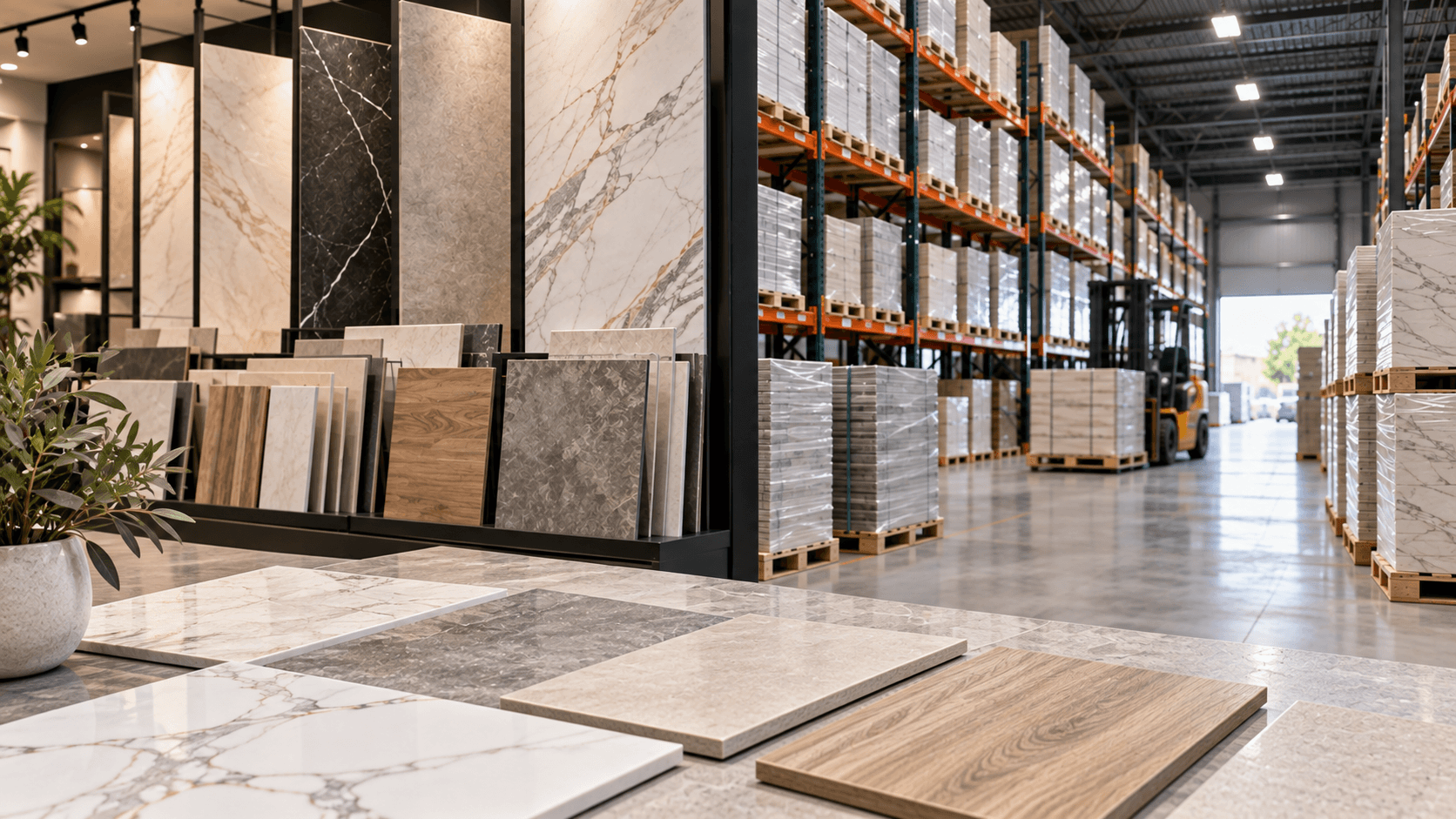
At Big M Stone & Tiles in Brampton, homeowners, contractors, builders, interior designers, and architects can explore a wide range of tile and stone options in a 20,000+ sq. ft. showroom, supported by a 200,000+ sq. ft. warehouse.
The goal is simple: choose a tile that looks right, performs well, and makes sense for your space.
What Should You Consider When Buying Tile?
Before choosing a colour or pattern, start with the space itself.
The most important factors are:
Where the tile will be installed
How much traffic the area receives
Whether the area gets wet
How much maintenance you want
The size of the room
The size and layout of the tile
The overall design style
Installation requirements
Your budget
Product availability
A beautiful tile is not necessarily the right tile for every application.
A glossy decorative tile may work beautifully on a kitchen backsplash. It may not be the best choice for a busy floor.
Likewise, a large-format porcelain tile can create a clean, modern look across a large floor. However, installation requires proper planning, handling, substrate preparation, and experienced installation.
The best tile choice balances design, performance, practicality, and installation.
1. Choose the Right Tile Material
The first major decision is the material.
The most common options include porcelain, ceramic, and natural stone. There are also engineered and specialty surfaces designed for specific applications.
Porcelain Tile
Porcelain is one of the most versatile tile materials available.
It is dense, durable, and available in a wide range of colours, textures, patterns, and finishes.
Modern porcelain can also replicate the appearance of natural materials.
You can find porcelain designed to look like:
Marble
Limestone
Travertine
Concrete
Wood
Onyx
Natural stone
Terrazzo
This makes porcelain particularly useful when you want a specific aesthetic without necessarily choosing the natural material itself.
Porcelain works well for many residential applications, including floors, bathrooms, kitchens, feature walls, and large open spaces.
It is also available in larger formats that can create a more continuous visual effect.
Ceramic Tile
Ceramic tile remains a popular choice for many interior applications.
It is available in countless colours, patterns, shapes, and finishes.
Ceramic can be especially useful for walls, backsplashes, decorative applications, and areas where extreme durability is not the primary concern.
The important point is that ceramic and porcelain are not interchangeable in every application.
The right choice depends on the specific product and where you intend to use it.
Natural Stone
Natural stone offers something different.
Every piece can have natural variations in colour, veining, texture, and pattern.
Common natural stone options include marble, limestone, travertine, and other stone varieties.
Natural stone can create a distinctive, high-end appearance. However, it can also require more maintenance depending on the material and application.
If you are considering natural stone, ask about sealing, cleaning, staining, and long-term care before making a decision.
2. Porcelain vs. Ceramic Tile: Which Is Better?
This is one of the most common questions people ask when shopping for tile.
There is no universal winner.
Porcelain is often a strong choice when durability, low water absorption, and heavier use are priorities.
Ceramic can be an excellent choice for walls, backsplashes, and other applications where those requirements are less demanding.
The best material depends on the application.
Consideration | Porcelain | Ceramic |
Durability | Excellent | Good |
Water absorption | Generally lower | Varies by product |
Flooring | Many options suitable | Depends on product |
Walls | Excellent | Excellent |
Backsplashes | Excellent | Excellent |
Design options | Extensive | Extensive |
Large formats | Widely available | Available in selected formats |
Maintenance | Generally easy | Generally easy |
Always check the manufacturer's specifications for the specific tile before purchasing.
3. Think About Where the Tile Will Be Installed
The same tile does not necessarily work everywhere.
Your application should influence your selection.
Bathroom Tile
Bathrooms need materials that can handle moisture and regular cleaning.
For bathroom floors, consider:
Slip resistance
Surface texture
Water exposure
Cleaning requirements
Tile size
Grout requirements
If you're comparing options for a bathroom renovation, our guide to best bathroom floor tiles in the GTA covers the key factors to consider when choosing a practical and stylish flooring option.
For shower walls, appearance and maintenance become particularly important.
Large-format porcelain can reduce the number of grout joints while creating a more contemporary appearance.
For bathroom floors, smaller formats can also be useful because additional grout joints can add visual texture and, depending on the installation, provide more grout lines for traction.
For more detail, see our guide to large-format bathroom tiles in the GTA.
Kitchen Tile
Kitchens combine design with everyday wear.
Floor tile needs to handle foot traffic, spills, food, and regular cleaning.
Backsplashes give you more freedom to focus on colour, texture, shape, and pattern.
Popular kitchen choices include:
Porcelain
Ceramic
Marble-look porcelain
Stone-look porcelain
Subway tile
Decorative tile
Large-format tile
Your backsplash and flooring do not have to match exactly.
In fact, using complementary materials can create a more layered design.
For more ideas, explore our guide to kitchen tiles GTA.
Living Areas and Open-Concept Homes
Open-concept homes often benefit from consistent flooring.
Using the same tile across connected spaces can make a home feel larger and more cohesive.
Large-format porcelain can be especially effective in these spaces because it can create fewer visual breaks while giving the floor a clean, contemporary appearance.
Entryways and High-Traffic Areas
Entryways experience more everyday wear than many other areas of the home.
People bring in dirt, water, salt, and debris.
For these spaces, prioritize:
Durability
Easy cleaning
Appropriate slip resistance
A practical surface finish
A colour and pattern that can handle everyday use
This is one area where appearance should not be the only consideration.
4. Choose the Right Tile Size
Tile size can completely change how a room looks.
Small tiles can create visual detail.
Large tiles can make a space feel more continuous.
Common tile formats include:
Small-format tile
Subway tile
Square tile
Rectangular tile
Large-format tile
Slab-style surfaces
There is no single "best" tile size.
Instead, consider the size of the room, the layout, the design style, and the installation requirements.
Are Large Tiles Better for Small Rooms?
Not necessarily.
Large-format tile can work very well in smaller rooms because fewer grout lines can make the surface feel less visually interrupted.
However, the tile still needs to work with the room's dimensions.
Too many awkward cuts can reduce the visual benefit.
A professional layout plan can help determine whether a particular format makes sense.
5. Large-Format Tile Is a Major Design Option
Large-format tile has become increasingly popular in modern residential design.
It can create a clean, architectural appearance with fewer grout joints.
Big M Stone & Tiles carries large-format porcelain options including formats such as 32×64 and 36×72.
For homeowners working on a higher-end renovation or custom build, luxury tiles for custom homes can also create a more refined, cohesive look across larger spaces.
These larger formats can work particularly well for:
Open-concept floors
Large living areas
Modern kitchens
Bathrooms
Feature walls
Luxury interiors
Custom homes
However, large-format tile requires more than simply choosing a larger product.
Installation requires careful attention to:
Substrate preparation
Flatness
Handling
Layout
Cutting
Mortar coverage
Experienced installation
If you are considering large-format tile, plan the installation before purchasing the material.
For more information, see our guide to large-format kitchen tiles.
6. Matte vs. Glossy Tile
The finish affects both appearance and practicality.
Glossy Tile
Glossy tile reflects light.
It can make colours appear brighter and create a polished appearance.
Glossy finishes can work particularly well for:
Backsplashes
Shower walls
Feature walls
Decorative applications
However, glossy surfaces can show fingerprints, water marks, and dirt more easily.
Matte Tile
Matte tile has a softer appearance.
It can create a more understated and contemporary look.
Matte finishes are often popular for:
Floors
Modern bathrooms
Large-format tile
Stone-look surfaces
Minimalist interiors
Neither finish is automatically better.
The right choice depends on the room, lighting, cleaning expectations, and desired appearance.
7. Choose the Right Tile Colour
Colour is one of the most noticeable tile decisions.
However, do not choose a tile colour in isolation.
Consider the:
Cabinet colour
Countertops
Wall colour
Flooring
Lighting
Hardware
Furniture
Natural light
A tile that looks neutral in a showroom can look very different under warm or cool lighting at home.
That is why viewing physical samples is important.
Light Tile
Light colours can create an open, bright appearance.
They can work particularly well in:
Small bathrooms
Minimalist interiors
Modern kitchens
Bright open spaces
Dark Tile
Dark tile can create contrast and visual depth.
It can work especially well in:
Luxury bathrooms
Feature walls
Modern kitchens
Dramatic entryways
However, darker surfaces may show dust, water marks, or residue more easily depending on the finish.
Neutral Tile
Neutral colours remain popular because they work with many design styles.
White, beige, grey, taupe, cream, and stone-inspired tones can provide a flexible foundation.
8. Consider Wood-Look Tile
Wood-look porcelain is an option for homeowners who want the appearance of wood with the characteristics of tile.
Modern printing technology can create realistic wood grain, knots, textures, and colour variation.
Wood-look tile can work in:
Kitchens
Bathrooms
Entryways
Living spaces
Open-concept homes
It can also help create visual continuity between spaces where traditional hardwood may not be the preferred material.
When comparing wood-look tile with hardwood, consider durability, moisture exposure, maintenance, installation, and overall design.
9. Think About Maintenance Before You Buy
A tile can look perfect in a showroom.
The more important question is whether you will enjoy living with it.
Before buying, ask:
How often does it need to be cleaned?
Does it need sealing?
Does the finish show water marks?
Does the surface hide dirt?
How much grout will there be?
Is the grout colour practical?
Will the material stain easily?
Are replacement tiles available?
Porcelain is often attractive to homeowners because many porcelain surfaces are relatively easy to maintain.
Natural stone may require additional care depending on the material.
Always ask for the manufacturer's cleaning and maintenance recommendations.
10. Don't Forget the Grout
Grout is part of the design.
It can either blend into the tile or create contrast.
A matching grout colour can make a tiled surface feel more continuous.
A contrasting grout can emphasize the shape and pattern of each tile.
For example, a white subway tile with dark grout creates a very different appearance from the same tile with white grout.
Grout colour also affects maintenance.
A very light grout may require more attention in high-traffic areas.
Think about grout when choosing the tile, not after the tile has already been selected.
11. Understand Tile Ratings and Specifications
Tile appearance is only one part of the buying decision.
Depending on the application, you may also need to consider specifications related to water absorption, slip resistance, wear, shade variation, calibre, thickness, and intended use.
These details can help determine whether a specific product is appropriate for a floor, wall, bathroom, shower, backsplash, or other application.
Rather than choosing based on a single rating, review the manufacturer's technical information for the specific product.
If you are unsure whether a tile is suitable for a particular application, ask your tile supplier or installer before purchasing.
Technical specifications are especially important when selecting large-format products, natural stone, or tile for wet or high-traffic areas.
For broader information about building requirements in Ontario, homeowners can also refer to Ontario's Building Code.
12. Calculate How Much Tile You Need
Buying the correct amount of tile is important.
Start by calculating the total square footage of the area.
For a simple rectangular room:
Length × Width = Square Footage
For example:
10 feet × 12 feet = 120 sq. ft.
You then need to account for cuts, waste, layout, and future repairs.
A common approach is to purchase approximately 10% extra tile for a straightforward installation.
More complex layouts, diagonal patterns, unusual room shapes, or specialty materials may require additional allowance.
The exact amount should be confirmed with your installer or tile supplier.
Do not assume that you can simply return later for another box.
Tile batches can vary slightly in colour and shade.
Buying sufficient material from the same production run can help maintain consistency.
13. Check Tile Availability Before Finalizing Your Design
This is particularly important for larger projects.
You may find the perfect tile online or in a sample, only to discover there is not enough inventory for the entire project.
That can create delays or require an unexpected substitution.
Before finalizing your selection, ask about:
Current inventory
Available quantities
Lead times
Matching products
Shade and calibre
Future availability
Special-order requirements
This is where a large local showroom and warehouse can be useful.
Big M Stone & Tiles operates a 20,000+ sq. ft. showroom and 200,000+ sq. ft. warehouse in Brampton, giving customers the opportunity to explore products in person and discuss larger project requirements.
For contractors and builders, inventory can be particularly important when purchasing tile for multiple rooms or larger residential projects.
14. Look at the Tile in Person
Online research is useful.
However, tile is a physical product.
Screens can change the appearance of:
Colour
Texture
Veining
Gloss
Pattern
Scale
Whenever possible, view the actual tile or a large sample.
This is particularly important for marble-look, stone-look, wood-look, and heavily patterned surfaces.
A small online image cannot always show how a tile will look across an entire floor or wall.
A showroom also lets you compare multiple products side by side.
15. Bring Your Other Finishes With You
If possible, bring samples of the materials already selected for your project.
These might include:
Cabinet samples
Countertop samples
Paint colours
Flooring samples
Hardware finishes
Backsplash samples
Then compare the tile alongside those materials.
This can reveal undertones that are difficult to see when materials are viewed separately.
For example, two tiles may both look "white" online.
One may have a warm cream undertone.
The other may have a cooler grey undertone.
The difference can become obvious when placed beside your cabinets and countertops.
16. Don't Choose Tile Based on Price Alone
Price matters.
But the cheapest tile is not always the least expensive option over the life of a renovation.
Consider the complete project cost:
Tile + installation + materials + maintenance + replacement risk
A tile that costs slightly more but works better for the application may provide better long-term value.
The reverse can also be true.
You do not need the most expensive tile for every room.
The objective is to match the right product to the right application.
17. Ask These Questions Before Buying Tile
Before placing your order, ask your tile supplier or installer:
Is this tile suitable for my application?
Is it suitable for floors or walls?
Is it appropriate for wet areas?
What maintenance does it require?
Does it require sealing?
What installation method is recommended?
What grout should I use?
How much extra tile should I order?
Is the product currently in stock?
Can I get additional material from the same batch later?
Are there matching or coordinating products?
Does the tile require a specific installation technique?
These questions can prevent expensive mistakes later.
18. Where to Buy Tile in the GTA
The GTA has no shortage of places to purchase tile.
However, shoppers should look beyond the number of products listed online.
A strong tile showroom should give you the ability to:
See products in person
Compare different materials
Explore different sizes
Understand application requirements
Review current inventory
Discuss project quantities
Coordinate tile with other finishes
Get help with product selection
Comparing top tile stores in the GTA can also help you evaluate showroom selection, product variety, inventory and the level of support available before making a purchase.
For larger residential projects, inventory and product availability can become just as important as design.
Big M Stone & Tiles is located at 101 Glidden Road in Brampton and serves homeowners, contractors, builders, designers, and architects across the GTA.
The showroom features more than 20,000 sq. ft. of display space, while the warehouse spans more than 200,000 sq. ft.
The showroom and warehouse provide space for customers to explore a broad selection of tile and stone products and discuss requirements for residential and larger projects.
Tile Buying Guide GTA: Quick Decision Checklist
If you are still unsure where to start, use this checklist.
Step 1: Identify the Application
Are you buying for a:
Bathroom
Kitchen
Floor
Shower
Backsplash
Entryway
Living area
Feature wall
Custom home
Step 2: Choose the Material
Compare:
Porcelain
Ceramic
Natural stone
Specialty surfaces
Step 3: Choose the Size
Consider:
Small format
Standard format
Large format
Slab-style surfaces
Step 4: Choose the Finish
Decide between:
Matte
Glossy
Textured
Natural-looking surfaces
Step 5: Choose the Colour and Pattern
Coordinate the tile with your:
Cabinets
Countertops
Walls
Flooring
Lighting
Furniture
Step 6: Check Performance
Confirm that the tile is appropriate for the intended application.
Step 7: Check Availability
Make sure enough material is available for your project.
Step 8: Calculate Quantity
Include a suitable allowance for cuts and future repairs.
Step 9: Confirm Installation Requirements
Make sure your installer understands the requirements for the specific product.
Step 10: View It in Person
Whenever possible, compare the actual tile before making the final decision.
Frequently Asked Questions About Buying Tile in the GTA
What is the best tile for a home?
There is no single best tile for every home.
Porcelain is a versatile choice for many floors, bathrooms, kitchens, and high-use areas. Ceramic and natural stone can also be excellent choices depending on the application.
The best tile is the one that matches the space, performance requirements, design, maintenance expectations, and budget.
Is porcelain better than ceramic tile?
Porcelain generally offers greater density and lower water absorption than standard ceramic tile. However, ceramic can be an excellent choice for many walls, backsplashes, and other applications.
The right choice depends on where the tile will be installed.
What tile is best for high-traffic areas?
Durable porcelain tile is often a strong choice for high-traffic residential areas.
However, the specific product's technical specifications should always be reviewed before purchase.
Are large-format tiles better?
Large-format tiles are not automatically better.
They can create a clean, modern appearance with fewer grout lines. However, they require proper installation and may not be ideal for every room or layout.
What size tile makes a room look bigger?
Large-format tile can make a room feel more open because fewer grout lines create fewer visual interruptions.
However, the best size depends on the room dimensions and layout.
How much extra tile should I buy?
Around 10% extra is commonly used as a starting point for straightforward installations.
Complex layouts may require more.
Your installer or tile supplier can help determine the appropriate allowance.
Should floor and wall tiles match?
They do not have to match.
Using complementary colours, textures, or patterns can create a more sophisticated design.
Matching tiles can also create a seamless appearance.
Is matte or glossy tile better?
Neither is universally better.
Glossy tile can reflect light and create a polished appearance. Matte tile offers a softer look and is often popular for floors and contemporary interiors.
Choose based on the application and desired appearance.
Where can I see a large selection of tile in the GTA?
Visiting a large tile showroom allows you to compare materials, sizes, colours, and finishes in person.
Big M Stone & Tiles in Brampton has a 20,000+ sq. ft. showroom and a 200,000+ sq. ft. warehouse serving customers across the GTA.
Final Thoughts: Choose the Right Tile, Not Just the Prettiest Tile
The best tile decision starts with the space.
Think about performance first.
Then consider size, finish, colour, maintenance, installation, availability, and budget.
Most importantly, look at the complete project rather than one tile in isolation.
A tile that looks beautiful in a photograph may not be the right choice for your bathroom floor.
Likewise, a practical porcelain tile can become a major design feature when the size, colour, finish, and installation are right.
If you are planning a renovation or new home project, visiting a showroom can make the decision much easier.
At Big M Stone & Tiles, customers can explore a large selection of tile and stone in person and discuss options for residential, custom-home, contractor, builder, and design projects.
Big M Stone & Tiles
101 Glidden Road, Brampton, Ontario
20,000+ sq. ft. showroom
200,000+ sq. ft. warehouse
Explore the collection, compare your options, and choose the tile that makes sense for your space.
Tile buying guide GTA: learn how to choose the right tile material, size, finish...
Oct 1, 2026

Looking for a tile supplier for builders in Ontario? Learn how to evaluate inven...
Sep 21, 2026

Planning a large tile order? Learn how to choose a bulk tile supplier GTA contra...
Sep 16, 2026
Tile buying guide GTA: learn how to choose the right tile material, size, finish and colour for kitc...
Oct 1, 2026
Sep 21, 2026
Sep 16, 2026
Sep 9, 2026

Sep 5, 2026