How to Choose the Right Tile Size for Your Space
Learn how to choose tile size for bathrooms, kitchens and open-concept spaces. Compare formats, grout lines, layout and installation requirements.
Tile size can change how a room looks and feels.
Smaller tiles create more visual detail, while larger tiles create broader surfaces with fewer grout lines. Both can work beautifully, depending on the space and the design.
However, the best tile size is not determined by room size alone. You also need to consider the layout, application, design style, grout joints and installation requirements.
This guide explains how to choose tile size for different rooms and what to consider before making your final selection.
If you're planning a renovation, start with our Tile Buying Guide GTA: How to Choose the Right Tile for Your Home for a broader overview of tile materials, finishes, sizes and selection considerations.
What Is the Best Tile Size?
There is no single best tile size for every room. The right option depends on the dimensions of the space, the intended application and the appearance you want to achieve.
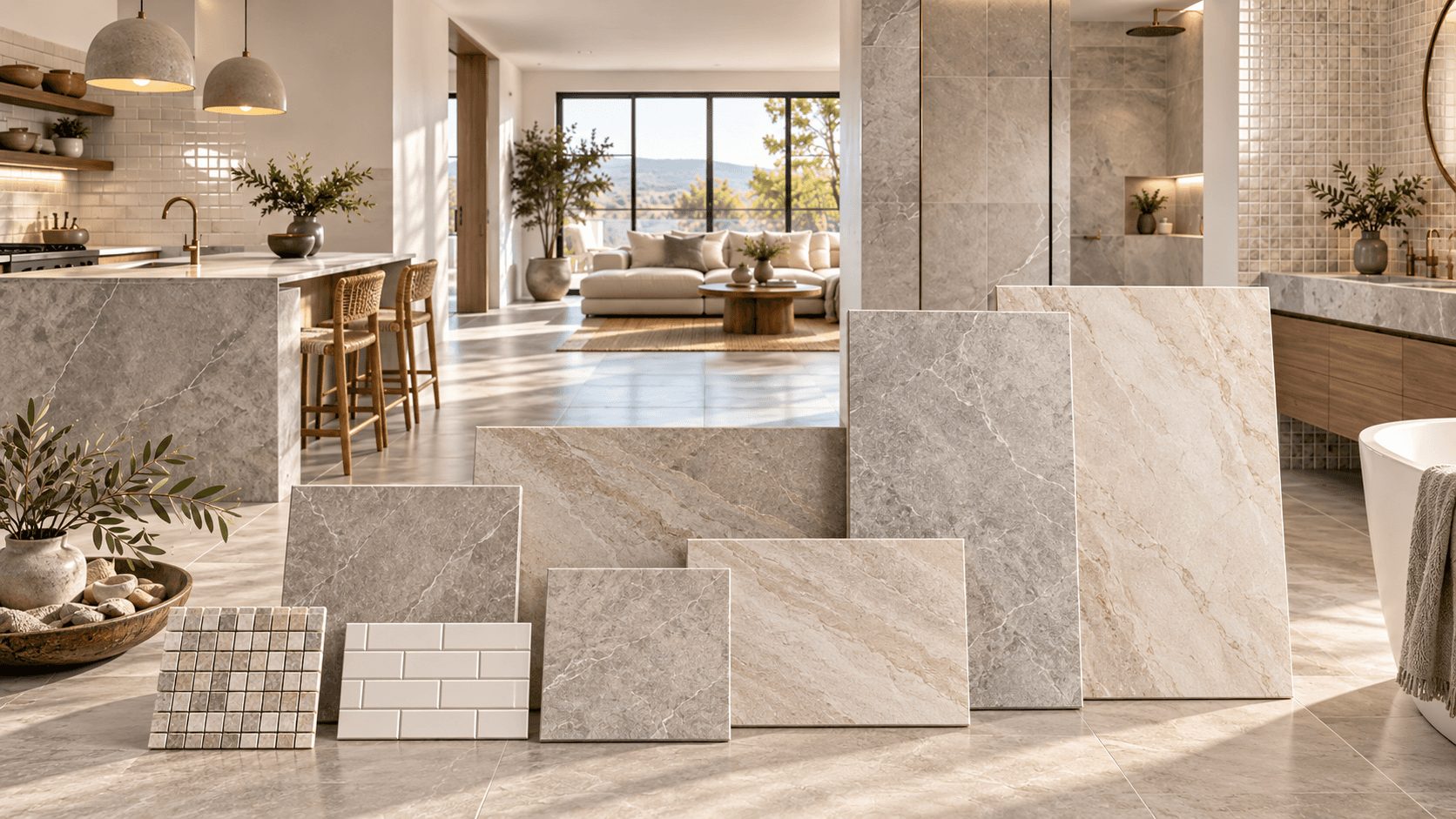
Common tile formats include:
Small-format and mosaic tile
Subway tile
12×12
12×24
24×24
24×48
32×64
36×72
Smaller formats can create detailed patterns and work well around curves, corners and compact areas. Larger formats can create a more continuous appearance with fewer grout joints.
The dimensions listed above are examples rather than a complete list of available sizes. Actual dimensions and availability vary by product and collection.
Large Tile Can Make a Room Feel More Open
Large-format tile creates fewer grout lines across a given area, which can reduce visual interruptions and make a surface feel more continuous.
This can work particularly well in:
Open-concept homes
Large living rooms
Modern kitchens
Contemporary bathrooms
Custom-home interiors
A consistent tile format across adjoining rooms can also help create a cohesive design.
However, large-format tile can work in smaller rooms, too. The key is to plan the layout around the room's dimensions, doorways, fixtures and other obstacles.
Before selecting a size, consider where the full tiles and cut pieces will fall. A well-planned layout can make a greater difference to the finished appearance than choosing a larger format alone.
What Tile Size Is Best for a Small Bathroom?
There is no automatic answer. Both large and small tiles can work well in a compact bathroom.
Large-format tile may help create a more continuous appearance because fewer grout joints interrupt the surface. This can be especially effective on bathroom walls.
Smaller tiles can also be practical in certain areas. For example, mosaics and other small formats are often used on shower floors because their additional grout joints can accommodate the changes in slope needed for drainage.
When choosing a tile size for a small bathroom, consider:
The dimensions and shape of the room
The location of the shower, toilet and vanity
The number of cuts required around fixtures
The floor slope and drainage requirements
The tile's suitability for wet-area use
The overall colour and grout combination
The right format should suit the layout as well as the design.
For more bathroom-specific ideas, explore our guide to large-format bathroom tiles in the GTA.
What Tile Size Is Best for a Kitchen?
Kitchen floors offer considerable flexibility. The right format depends on the kitchen's dimensions, cabinetry, adjoining rooms and preferred design style.
Common options include:
12×24 porcelain: A versatile rectangular format for many residential kitchens.
24×24 porcelain: A square format that can create a balanced, contemporary appearance.
Large-format porcelain: Suitable for layouts where fewer grout joints and broader surfaces are desired.
Wood-look rectangular tile: An option for introducing the appearance of wood while using a tile surface.
For backsplashes, smaller formats can introduce more detail and pattern. Subway tile remains a classic option, while larger tiles can create a cleaner, more understated appearance.
When selecting kitchen tile, consider how the floor will look alongside the cabinetry, countertops and backsplash. The formats do not need to match, but they should work together visually.
For additional inspiration, see our guide to kitchen backsplash tiles in the GTA.
What Tile Size Is Best for Open-Concept Homes?
Large-format tile is often a strong option for open-concept interiors because it can help visually connect adjoining areas.
A consistent tile across the kitchen, dining area, living room and hallway can create a cohesive appearance, particularly when the spaces share an open floor plan.
Before choosing a format, consider the entire connected area rather than measuring each room in isolation.
Look at:
Transitions between rooms
Doorways and changes in floor level
The placement of furniture and kitchen islands
The direction of the tile layout
Where cuts will appear along walls and cabinetry
A layout that works in one room may produce awkward cuts when extended into another. Planning the full area first helps you choose a format that looks balanced throughout the space.
Large-Format Tile for GTA Homes
Large-format tile is an option worth considering for contemporary homes and custom residences throughout the GTA.
At Big M Stone & Tiles in Brampton, available large-format porcelain options include 32×64 and 36×72, depending on the collection.
These formats can work well for large floors, feature walls, bathrooms and custom-home interiors. Their suitability depends on the room layout, product specifications and installation requirements.
If you're exploring premium finishes for a custom project, our guide to luxury tiles for custom homes provides additional ideas for selecting tile that complements the overall design.
Tile Size and Grout Lines
Tile size affects the number of grout joints across a surface.
Smaller tiles generally create more joints, while larger tiles create fewer. Grout can therefore become a significant part of the finished design.
Consider these two approaches:
Contrasting grout: Makes the tile pattern and individual pieces more noticeable.
Coordinated grout: Creates a more blended appearance and allows the tile surface to stand out.
The required grout-joint width depends on the tile's dimensions, dimensional variation, edge type and installation instructions. Larger tile does not mean grout joints can simply be eliminated.
Think about grout colour and joint placement when planning the tile layout, not only after choosing the tile.
Does Large Tile Mean Less Maintenance?
Potentially. Large-format tile can reduce the amount of grout across a surface, which may simplify routine cleaning.
However, maintenance depends on more than tile size. The grout type, tile finish, surface texture and manufacturer's cleaning recommendations all matter.
A textured tile may require more attention than a smooth one, regardless of its format. Likewise, proper installation and grout selection influence how the finished surface performs over time.
Choose a tile based on the room's requirements and your maintenance preferences rather than assuming that a larger format will always be easier to care for.
Tile Size and Installation Requirements
Tile size affects how a product is handled, cut and installed.
Large-format tile may require more careful handling, accurate cutting and closer attention to substrate flatness. Uneven surfaces can make alignment issues and lippage more noticeable.
Before ordering tile, discuss these factors with your installer:
Substrate preparation: The surface must meet the product's flatness and preparation requirements.
Handling: Larger tiles may require additional equipment or assistance.
Cutting: Plan cuts around walls, cabinets, fixtures and other obstacles.
Mortar coverage: Follow the tile manufacturer's installation requirements.
Layout: Confirm the starting point, grout-joint placement and edge cuts.
Product suitability: Check that the selected tile is appropriate for its intended floor or wall application.
For additional layout-planning guidance, see Tilerio's guide to planning a floor tile layout. It explains how room dimensions, tile size and grout joints affect the placement of cuts along the edges.
Discuss installation requirements before placing your order so the selected format works for both the design and the space.
How to Choose Tile Size: A Simple Process
1. Measure the room
Record the length, width and overall shape of the area. For rooms with recesses or irregular walls, measure each section separately.
2. Consider the room layout
Look at doorways, corners, cabinets, fixtures and transitions. These features affect where tiles need to be cut.
3. Decide on the design
Consider whether you want a traditional, modern, minimalist, decorative or luxury appearance. The tile format should complement the wider interior design.
4. Think about grout
Decide whether you want grout joints to stand out or blend into the surface. Remember that the required joint width also depends on the tile and installation instructions.
5. Compare different formats
Look at standard and large-format options. Compare actual samples where possible, rather than relying only on product photographs.
6. Plan the layout
Check how the tile will fit across the entire area. Pay particular attention to narrow cuts and transitions where different spaces meet.
7. Confirm installation requirements
Ask your installer about substrate preparation, cutting, handling and product suitability before finalizing the order.
Final Thoughts
The best tile size is the one that works with the room, the layout and the intended application.
Large-format tile can create a clean, continuous appearance with fewer grout joints. Standard formats offer flexibility for a wide range of spaces and designs. Smaller tiles can be especially useful for decorative patterns and certain shower-floor applications.
Instead of asking only which tile size looks best, consider how the format will fit the actual space, where the cuts will fall and what the installation requires.
Comparing different sizes and planning the layout before ordering can help you choose a tile that looks right and works for your project.
At Big M Stone & Tiles, you can explore available tile formats, colours and finishes to find options suited to your home or custom project.
Learn how to choose tile size for bathrooms, kitchens and open-concept spaces. C...
Oct 26, 2026

Learn how much extra tile to buy for your project. Calculate square footage, acc...
Oct 22, 2026

Compare glossy vs matte tile for floors, bathroom walls and kitchen backsplashes...
Oct 18, 2026
Learn how to choose tile size for bathrooms, kitchens and open-concept spaces. Compare formats, grou...
Oct 26, 2026
Oct 22, 2026
Oct 18, 2026

Oct 15, 2026

Oct 10, 2026